15 B2B Video Marketing Examples and Why They Work


15 B2B Video Marketing Examples and Why They Work
The best B2B video marketing examples succeed because every creative decision supports a clear business objective. They know who the audience is, what that audience needs to understand, where the video will appear, and what should happen after someone watches it.
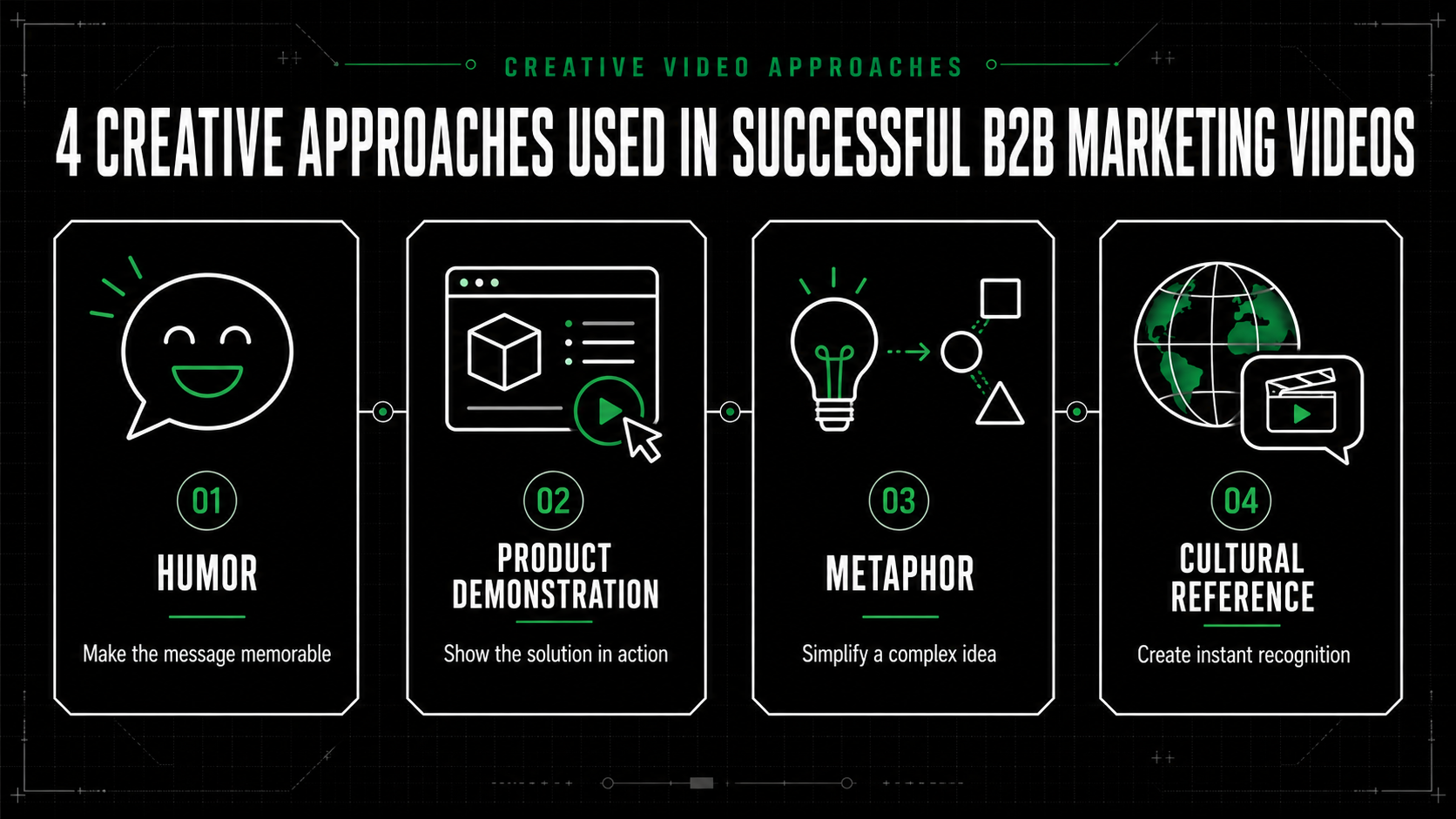
Some use humor to make a technical product memorable. Others demonstrate a feature, let customers provide proof, or build trust by teaching rather than selling.
The following 15 examples cover brand awareness, product marketing, customer proof, demand generation, and education. They show that effective B2B video does not require one fixed style or production formula.
The right approach depends on the message, audience, buyer journey stage, and distribution plan.
What Makes a B2B Video Example Worth Studying?
A large view count does not automatically make a video useful to a business.
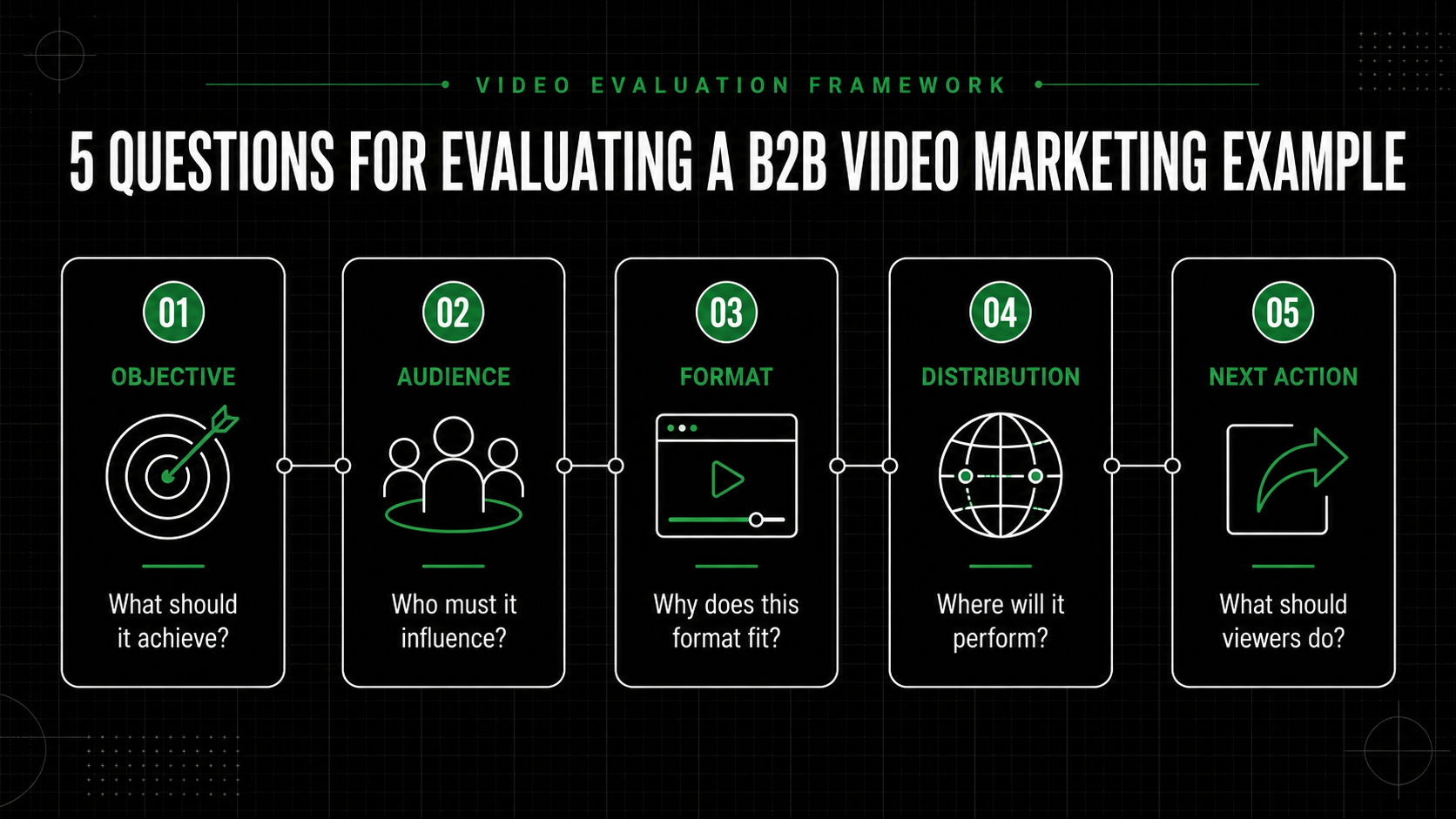
When reviewing video marketing examples, ask five questions:
- What business objective does the video support?
- Which audience or buyer problem does it address?
- Why was this format chosen?
- Where could the video be distributed?
- What should the viewer think or do afterward?
Production quality matters, but it should serve the message. A technically impressive video that does not explain why the product matters is less useful than a simple video built around a clear buyer need.
With that standard in mind, here are 15 B2B video examples worth studying.
1. Slack: “So Yeah, We Tried Slack”
Slack’s video follows a production team as its members begin using the platform. Instead of presenting a standard software demonstration, the video shows Slack entering a workplace and changing how the team communicates.
Viewers learn about channels, search, file sharing, and integrations through recognizable work situations. The documentary-style delivery also makes the people and product feel approachable.
Why it works: The product becomes part of the story. Slack demonstrates how the platform feels to use without relying on a long feature list.
Lesson: If your product changes a daily workflow, show the workflow in action and let viewers recognize their own frustrations.
2. Zendesk: “I Like It When He Gives Me the Business”
Zendesk presents the relationship between a company and its customers as an older married couple discussing communication problems.
The metaphor turns customer service software into a human story about listening, frustration, and loyalty. Zendesk does not need to explain every feature because the concept establishes why better customer communication matters.
Why it works: It begins with the emotional problem behind the software and gives a potentially dry subject a memorable personality.
Lesson: When a product is abstract, use a familiar human situation to clarify the problem. The metaphor should support the message rather than become a distraction.
3. Volvo Trucks: “The Epic Split”
Volvo Trucks placed Jean-Claude Van Damme between two reversing trucks to demonstrate the precision and stability of Volvo Dynamic Steering.
The stunt is dramatic, but it has a clear product purpose. Instead of simply claiming that the steering system is precise, Volvo created a demonstration viewers could immediately understand.
The test was filmed in one take on a closed runway, which strengthened its credibility.
Why it works: One technical advantage becomes one unforgettable visual idea.
Lesson: Identify your strongest product claim and determine how you can demonstrate it. Do not cover ten benefits when one convincing proof point can establish trust.
4. Adobe: “Click, Baby, Click”
Adobe’s commercial shows executives celebrating a sudden increase in online orders without investigating why it happened. Production expands rapidly before they discover that the clicks came from a baby repeatedly tapping a tablet.
The video promotes marketing analytics by showing what can happen when a company acts on data without understanding it.
Why it works: Adobe turns an analytics problem into a clear story with escalating business consequences.
Lesson: Show the risk of making decisions without your product. Buyers may understand the cost of the problem faster than they understand a list of technical capabilities.
5. Hootsuite: “A Game of Social Thrones”
Hootsuite recreated the opening sequence of Game of Thrones, presenting social networks as competing kingdoms connected through its platform.
The reference matched Hootsuite’s product story. The platform helps companies manage multiple social networks from one place, so the idea of uniting separate territories supported the value proposition.
Why it works: The cultural reference earns attention, while the visual structure explains the product’s role.
Lesson: Use cultural references only when they have a logical connection to the product. Relevance matters more than joining a popular conversation.
6. monday.com: “Work Without Limits”
monday.com presents work as a flexible, physics-defying environment. The creative idea translates the flexibility of its Work OS into a visual world where teams are not limited by conventional processes.
The campaign expanded beyond one commercial into outdoor, transit, and digital advertising.
Why it works: An abstract product promise becomes a visual concept that can be used across multiple channels.
Lesson: When planning B2B video marketing campaigns, choose a central idea that can extend into short videos, paid ads, event graphics, landing pages, and social posts.
7. Cisco: “The Network. Intuitive.”
Cisco needed to explain networking technology that learns, adapts, and protects. Its campaign used videos, interactive product imagery, comparison tools, event content, and regional marketing to support one central message.
A later video featuring Peter Dinklage helped communicate the technical concept in a simple and confident way. Cisco also described the video as providing support for its sales teams and partners.
Why it works: The video supports a coordinated product launch instead of operating as an isolated asset.
Lesson: Build a message that sales, events, product marketing, and regional teams can all use.
8. IBM: “A Boy and His Atom”
IBM researchers created a stop-motion film by moving individual molecules with a scanning tunneling microscope.
The animation tells a simple story, but the method used to create it demonstrates IBM’s scientific expertise. The project connects complex research in atomic memory and data storage with an idea that non-technical audiences can understand.
Why it works: The production method is also evidence behind the message.
Lesson: If your company has specialized expertise, show what it makes possible. Behind-the-scenes content can then explain the technical significance in more detail.
9. Caterpillar: “Stack”
Caterpillar’s “Stack” video shows heavy equipment operators playing a giant game of Jenga with blocks weighing hundreds of pounds.
The challenge demonstrates machine control, strength, precision, and operator skill without relying on a specification comparison. Caterpillar reported that the game took approximately 28 hours and was edited into a short video.
Why it works: Product performance is demonstrated through a simple challenge with visible difficulty and built-in suspense.
Lesson: Product demonstrations do not have to feel like technical tests. Give viewers a clear objective and a reason to keep watching.
10. GE: “Unimpossible Missions”
GE’s “Unimpossible Missions” explored whether supposedly impossible sayings could become real engineering challenges, such as catching lightning in a bottle.
The campaign created a repeatable format for showing GE’s science, engineering, and experimentation.
Why it works: Technical expertise is placed inside a question viewers want answered. The company proves its capabilities through action instead of making broad claims about innovation.
Lesson: Educational curiosity can create a stronger opening than a direct product message. Begin with an interesting problem, then demonstrate how your expertise helps solve it.
11. Salesforce: “Team Earth”
Salesforce’s “Team Earth” campaign used Matthew McConaughey and the idea of a “new frontier” to argue that businesses should help build a more equitable and sustainable future on Earth.
The campaign focused on Salesforce’s corporate values rather than a specific product. It also gave viewers ways to participate through educational resources and suggested actions.
Why it works: It connects the company to a wider business conversation and supports the message with opportunities to act.
Lesson: A values-led video must connect to company behavior. Support the story with credible programs, commitments, or resources.
12. ServiceNow: “The World Works With ServiceNow”
ServiceNow connects its platform to familiar examples of work continuing successfully behind the scenes.
This framing helps explain enterprise workflow software, which can otherwise be difficult to visualize. Instead of beginning with platform architecture, ServiceNow begins with the result of connected systems.
Why it works: A broad enterprise platform is organized around one clear and repeatable brand promise.
Lesson: If your product supports many use cases, find the common outcome connecting them. More focused product videos can explain specific applications later.
13. Google Workspace: “Champions of Change”
Google Workspace uses its “Champions of Change” series to feature people leading new ways of working within organizations.
Instead of making Google the hero, the videos focus on the people using technology to improve collaboration and create change. Google then supports the series with additional customer stories and industry-specific content.
Why it works: Customers provide credibility while the series format creates consistency across different organizations.
Lesson: Build customer videos around the customer’s challenge, decisions, and progress. The product should have an important role without taking ownership of the entire story.
14. Dropbox Business: Customer Stories
Dropbox Business brought several customers into one video to explain why they use the platform to collaborate and work more effectively.
Combining several voices allows Dropbox to demonstrate broader relevance while reinforcing common themes. It gives potential buyers reassurance that the product works across different teams and industries.
Why it works: Multiple customers provide different perspectives on one shared business need.
Lesson: A customer compilation can provide broad brand-level proof. A longer single-customer story is better when buyers need detailed evidence about a specific use case.
15. Mailchimp Presents
Mailchimp Presents created original films and series about entrepreneurs, small businesses, and working life.
Programs such as “Essentials” and “Unlikely Business Lessons” cover subjects that matter to Mailchimp’s audience without requiring every episode to explain its software.
Why it works: Mailchimp operates like a media brand, creating content its audience may choose to watch even when they are not researching marketing software.
Lesson: Educational and documentary content can build long-term brand affinity. This approach requires a clear editorial position, consistent production, and a realistic distribution plan.
What Can B2B Marketers Learn From These Examples?
The best B2B video marketing examples use different formats, but several principles appear repeatedly.
Focus on one central idea
Volvo demonstrated steering precision. Adobe showed the danger of misreading data. Zendesk focused on customer relationships.
A clear idea is easier to understand, remember, and adapt than a video filled with competing messages.
Make technical value visible
IBM, Caterpillar, Cisco, and GE transformed technical capabilities into stories or demonstrations. They gave audiences evidence instead of relying only on claims.
Ask what your audience needs to see before it will believe your message.
Match the video to the buyer journey
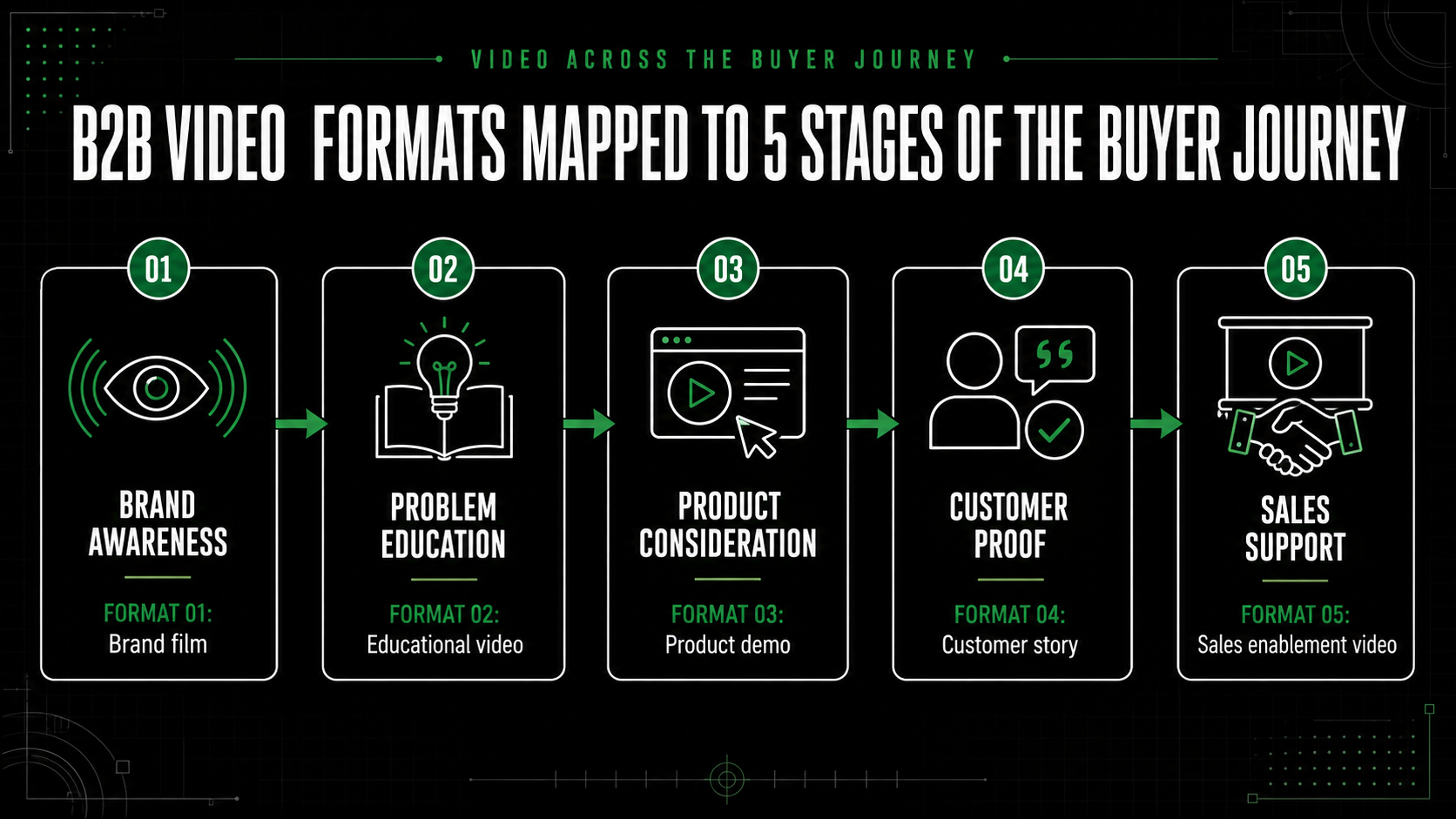
A brand film, customer story, product explainer, paid advertisement, webinar, and sales video perform different jobs.
Choose the format after defining the audience, objective, and distribution channel. Do not expect one video to perform every role.
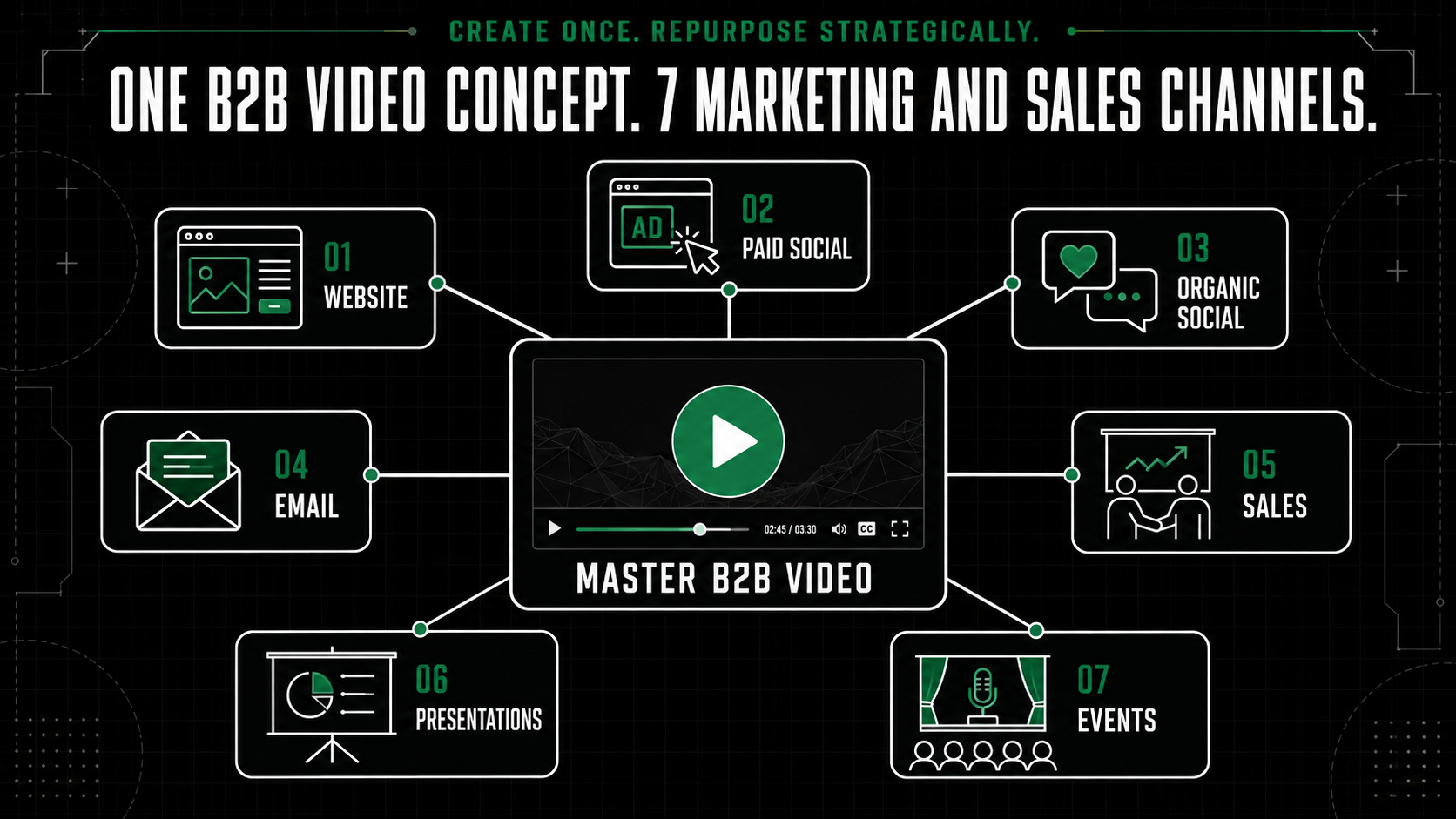
Plan a campaign, not one upload
monday.com, Cisco, Salesforce, Google Workspace, and Mailchimp extended their central ideas across multiple assets or channels.
One concept can often support a website, paid advertising, social posts, email campaigns, sales outreach, presentations, and events.
Give the viewer a relevant next step
The next action does not always have to be “request a demo.” It could be watching a product video, reading a customer story, registering for an event, or exploring an educational resource.
The right action depends on how much the viewer already knows and how ready they are to buy.
How Should SaaS Companies Apply These Lessons?
The most relevant B2B video marketing examples for SaaS companies include Slack, Zendesk, monday.com, Cisco, ServiceNow, Google Workspace, and Dropbox.
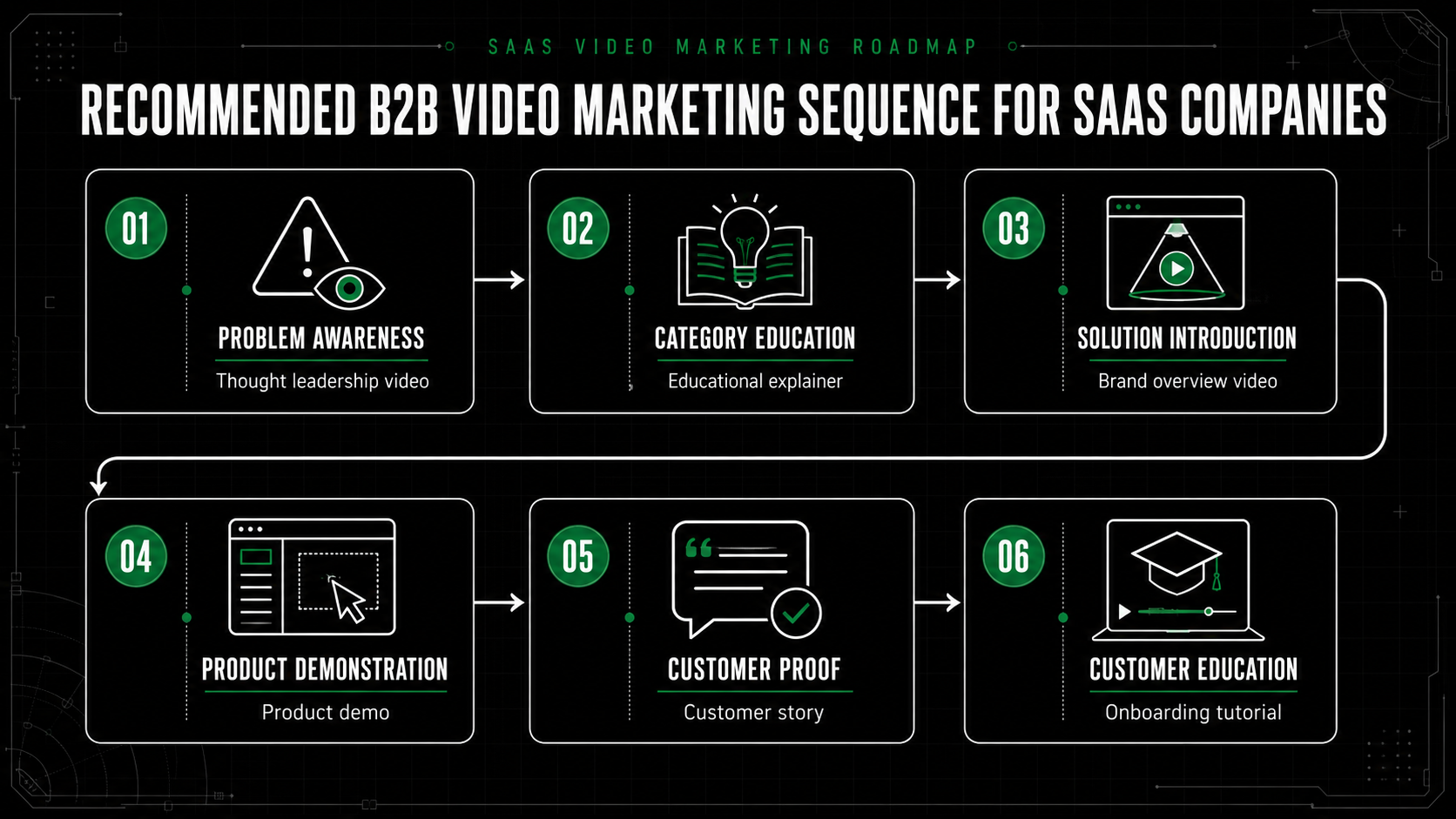
SaaS marketers can apply their lessons through a connected video sequence:
- Problem-focused video: Build awareness around a recognizable challenge.
- Product overview: Explain how the platform approaches the problem.
- Feature videos: Demonstrate workflows for specific users.
- Customer story: Provide credible proof from a relevant company.
- Sales videos: Answer common questions or objections.
- Customer education: Help existing users adopt the product.
This sequence is more useful than expecting one two-minute overview to support the entire buyer journey.
Frequently Asked Questions
What is B2B video marketing?
B2B video marketing uses video to reach, educate, persuade, or support business buyers. It can include brand films, product explainers, customer stories, paid advertisements, webinars, event videos, sales content, and customer education.
What makes a B2B marketing video effective?
An effective B2B video has a defined audience, business objective, central message, distribution plan, and next action. Its creative style should make the message easier to understand, believe, or remember.
Which B2B videos can help generate leads?
Product explainers, customer stories, webinars, paid social videos, and personalized sales videos can support lead generation. Performance also depends on targeting, the offer, landing page, distribution strategy, and sales follow-up.
How can one B2B video be repurposed?
A main video can become paid ad cutdowns, organic social clips, sales outreach content, presentation segments, event loops, email assets, still graphics, and shorter landing-page versions. Repurposing should be planned before production so the right material is captured.
Build the Video Around Its Business Objective
These examples show that there is no single creative formula for successful B2B video.
The right concept depends on what the company needs to achieve, what the audience must understand, and where the content will be distributed. Production quality supports the strategy, but it cannot replace it.
Spacebar Visuals helps B2B companies plan and produce videos for product marketing, demand generation, sales enablement, customer education, events, and brand awareness. We have worked with more than 100 companies, including ISO, Rho, and Cloaked.
If you are deciding what type of video to create or how to turn one concept into a connected campaign, book a video strategy call with Spacebar Visuals.
Let’s build your product story together


View Related Resources

Product Demo Video vs. Explainer Video
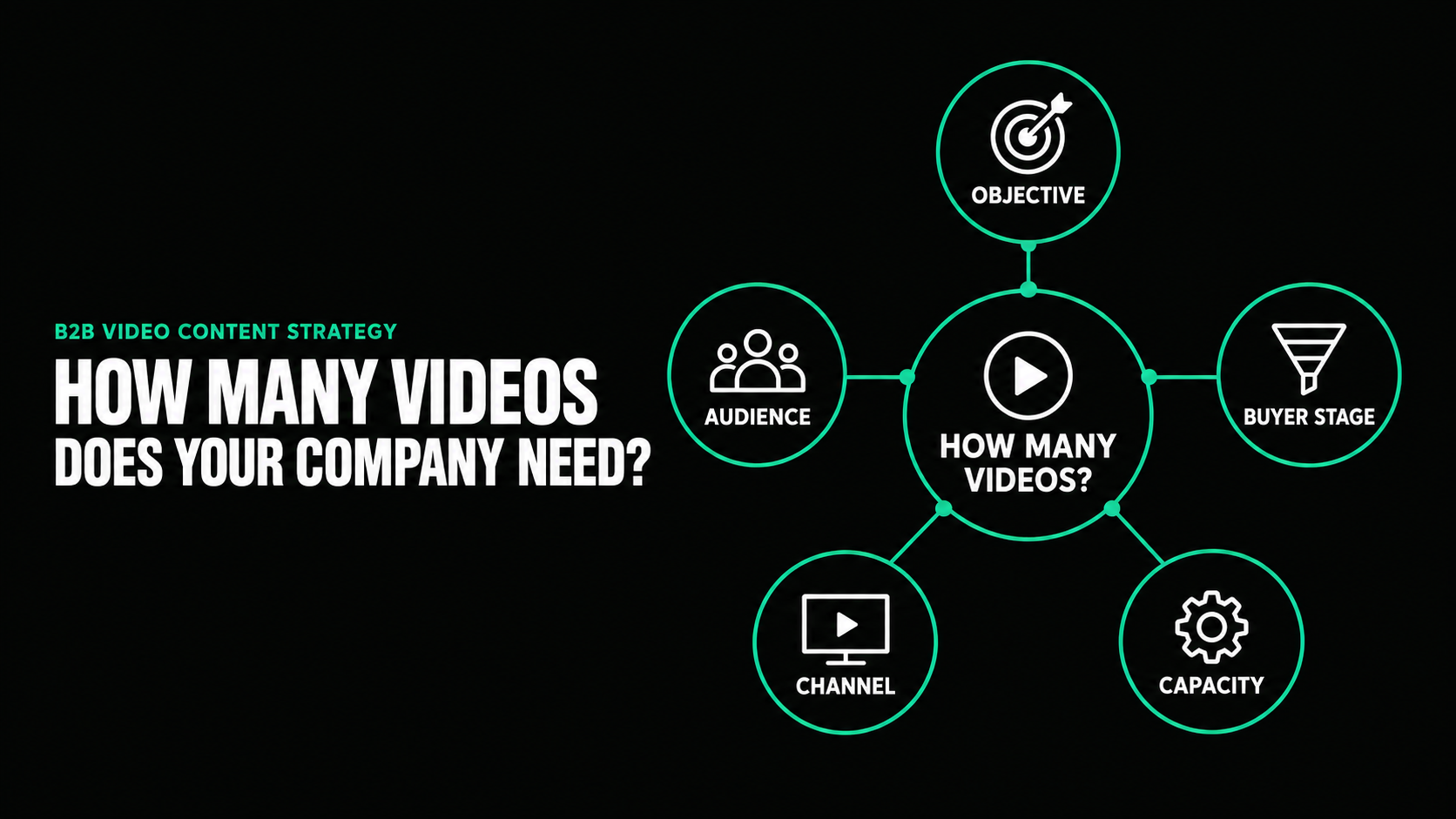
How Many Videos Does Your B2B Company Actually Need?
.png)